
OUR PHILOSOPHY OF CARE
What is healthy dentistry?
For decades, most dentists have relied on the same traditional techniques to fix cavities and broken-down teeth, methods that often require removing large amounts of healthy tooth, placing metal in the mouth, and working below the gum line. None of that improves the health of your mouth. In fact, it can cause lasting damage. We practice a different way.
THE CORE IDEA
Keep as much of your natural tooth as possible
Healthy Dentistry is a modern approach that removes as little tooth structure as possible and keeps our work above the gum line, an approach known as Supra-gingival Minimally Invasive Dentistry.
Removing too much tooth weakens what remains and can damage the nerve, often leading to a root canal. By treating only the affected area and preserving the rest, we reduce prep time, cause less trauma to the tooth and gums, keep treatment more comfortable, and shorten healing, all while maintaining the tooth's natural strength and beauty.
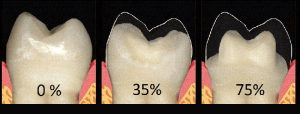
Taking away too much tooth structure weakens the remaining tooth and can cause irreparable damage to the nerve, often leading to a root canal.
HEALTHY GUMS & BONE
A healthy mouth is the absence of disease
More than 75% of people have some form of oral infection, and most don't even know it. The most common and most destructive is periodontal disease, a chronic bacterial infection of the gums and the bone that supports your teeth. Left untreated, it can lead to tooth loss, and it's been linked to heart disease, stroke, respiratory problems, low birth weights, and more.
Like diabetes or high cholesterol, it's a chronic condition, but the good news is that it's very treatable. With simple, non-surgical care and easy-to-follow guidance for home, we help you clear the infection and keep it away for the long term.
Healthy (White) Fillings
Fillings are placed in teeth where there is a small area of decay or a crack in the tooth. Traditionally, large areas of tooth structure are removed along with the affected area so that a silver (amalgam) or white filling could be retained. These preps are more aggressive and often go below the gum line.
With advances made in dental materials, composite, or white fillings do not require this excessive removal of the tooth because these materials bond to the tooth instead of relying on mechanical retention. More healthy tooth structure is maintained and the fillings stay away from the gums to avoid any gingival irritation.
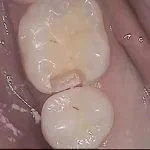
Composite filling prep – A very small, minimally invasive preparation for a tooth-colored filling. Much less tooth is removed as compared to an amalgam (silver filling) prep. The margins are left above the gum line and the tissues are untouched.
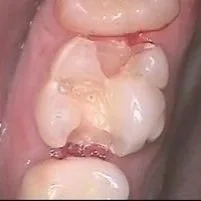
This photo shows a molar tooth after the removal of an old silver filling. Note the large amount of tooth structure that was drilled out to place that type of filling, and the bleeding gums from having a metal filling placed below the gum line.